

blog
Article on the War in Ukraine by Luca Attanasio
“Si vis pacem – the Latins used to say – para bellum”. If you want peace, prepare for war. This adage of Vegetius, a famous Latin author of the fourth century is anything but wisdom. On the contrary, it is important to turn the phrase around and paraphrase that if you want peace you need to prepare for peace and do all you can to avoid war.
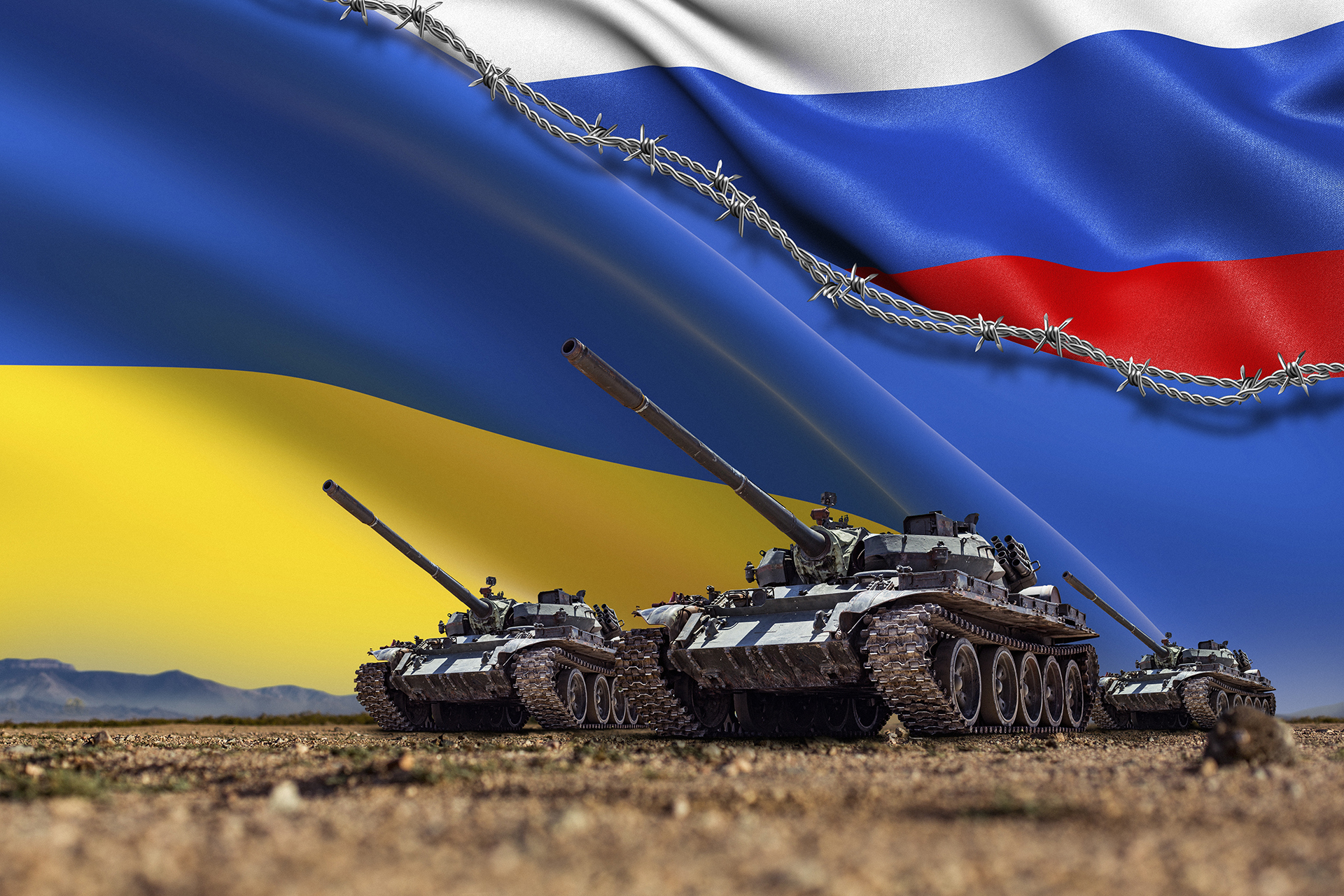
There is no doubt that the invasion initiated weeks ago by Vladimir Putin’s Russia of Ukraine is to be firmly condemned and sanctioned. The world assists, incredulous to an escalation as rapid as absurd and is astonished by watching the bombing and killing of unarmed and innocent civilians. It is incredible that not even the cease-fires called are respected and that negotiations are a total failure with no step further, not even an inch.
Now that the situation has greatly deteriorated, is even more difficult to reason and let rationality and reflection prevail over rage and fear. It is quite common and natural now to condemn, on the one hand, Russia’s aggression and to support the so called Ukraine resistance, on the other. Yet it is important to pause and reflect.
It is frightening indeed, if we look back and see that the response of many countries and supranational organizations has been nothing but sending weapons. It is tragic seeing Russian troops entering Ukraine, bombing, killing, committing atrocities, and forcing people to flee, especially children and women. But, it is equally scary to see how much the rhetoric of war is taking hold, as well as the belief that in order to help the Ukrainians and alleviate their suffering, we must support their arms race. Nobody here intends to be naïve nor to resort to slogans such as ‘put flowers in your guns’, yet it is depressing to see that in the year 2022, just an eye blink after the pandemic’s devastation, in the heart of Europe, men find no other means to solve problems than arms. And many and heavy arms. Here in Italy, the social media are filled with images of very young Ukrainian girls and boys taking up arms, it is absolutely atrocious to see even very young children smiling at the camera with Kalashnikov in their arms, but also to see that the debate has reached to a very low level: either you exalt enthusiastically the war, agree with those who send arms, or you are pro-Putin .
The experience of the Peace Institute goes the other way. It knows that to make peace is the hardest of actions, but at the same time, given its experience in impossible situations such as areas where Boko Haram, ISIS/ISIL, or other terrible terroristic organizations, operate, knows that there is always an alternative to war. The Peace Institute, with Mothers without borders, one of its emanations, was able to foster reconciliation between mothers and their children working for a terroristic organization or operate in contexts where hatred and extreme violence reigned and help, albeit in a limited way, to recreate a peaceful environment
Nobody here wants to show only a kind of irenic approach to such complex geopolitical contexts, we are well aware of what Real Politik means, but after strongly condemning the decision of Russia to invade and occupy Ukraine, all the efforts now should be addressed to find a peaceful solution. It would be great if a pool of wise people could stop and think of alternative ways to stop war before it will really be too late.
I believe that one important step should be to find and designate powerful and credible mediators, since, until now, we have witnessed a macabre theater of people sitting in front of each other without any title, will, nor, above all, ability to negotiate. Much better if these are women.
Some time ago, I had to write an article for an important Italian geopolitical magazine on the role of women in creating and facilitating peace in the world. It was striking to see that many studies show that when peace talks are mediated or directed by women, the chances of success are significantly higher. Prestigious researchers, such as Reimagining Peacemaking: Women’s Roles in the Peace Processes by IPI, International Peace Institute or Women’s Participation in Peace Processes by Council on Foreign Relations or The UN Secretary-General’s report Women and Peace and Security released in September 2020, exactly 20 years after the UN Security Council Resolution 1325 established the Women, Peace and Security Agenda, strip the veil off one of the greatest contradictions of the contemporary era. One of the most corroborated research studies, for example, based on the analysis of 882 agreements reached in 42 armed conflicts active in the period between 1989 and 2011, shows that agreements with women among the signatories are definitely more durable, are implemented at higher rates, and contain more measures aimed at promoting reforms with a higher rate of effective activation. Another, conducted on 98 peace agreements reached in 55 countries between 2000 and 2016, leaves no doubt that the agreements obtained thanks to the participation of women in the early stages, have a greater chance of containing measures dedicated to gender respect and the construction of a more just society in the post-conflict period. Women’s pressure groups of civil society, made up of representatives of associations, activists, women involved in politics, who contribute in various ways to the process that leads to the signing, are extraordinarily effective tools in having measures against social inequality and gender respect, child care, etc. included in the agreements.
Yet If you scroll through any document or do a minimal fact checking regarding the actual involvement of women in world peace processes, you will find that it is incredibly residual. The indisputable evidence corroborated by science on such a sensitive topic as the pursuit of peace and security remains largely neglected, while the chairs of those who sit around the world’s negotiating tables, at a time when the production and sale of arms are increasing (in 2020, nearly 531 billion dollars on armaments) and the number of conflicts is growing steadily (there are nearly 80 countries in which one or more conflicts are taking place and about a thousand irregular armies, militias, terrorist groups or their spin-offs currently in action around the world, as the Wars in the world website shows), remain firmly occupied by men.
Why not, then, experiment during this humanitarian crisis, with a new approach and assign women to conduct new talks? Peace is also a question of creativity and of being able to change and think twice. Let’s sing again, this time yes, a good adage, that giving peace every chance before resorting to war is the only viable solution.
Luca Attanasio
9 March 2022
Leave a reply